What are the two choices?
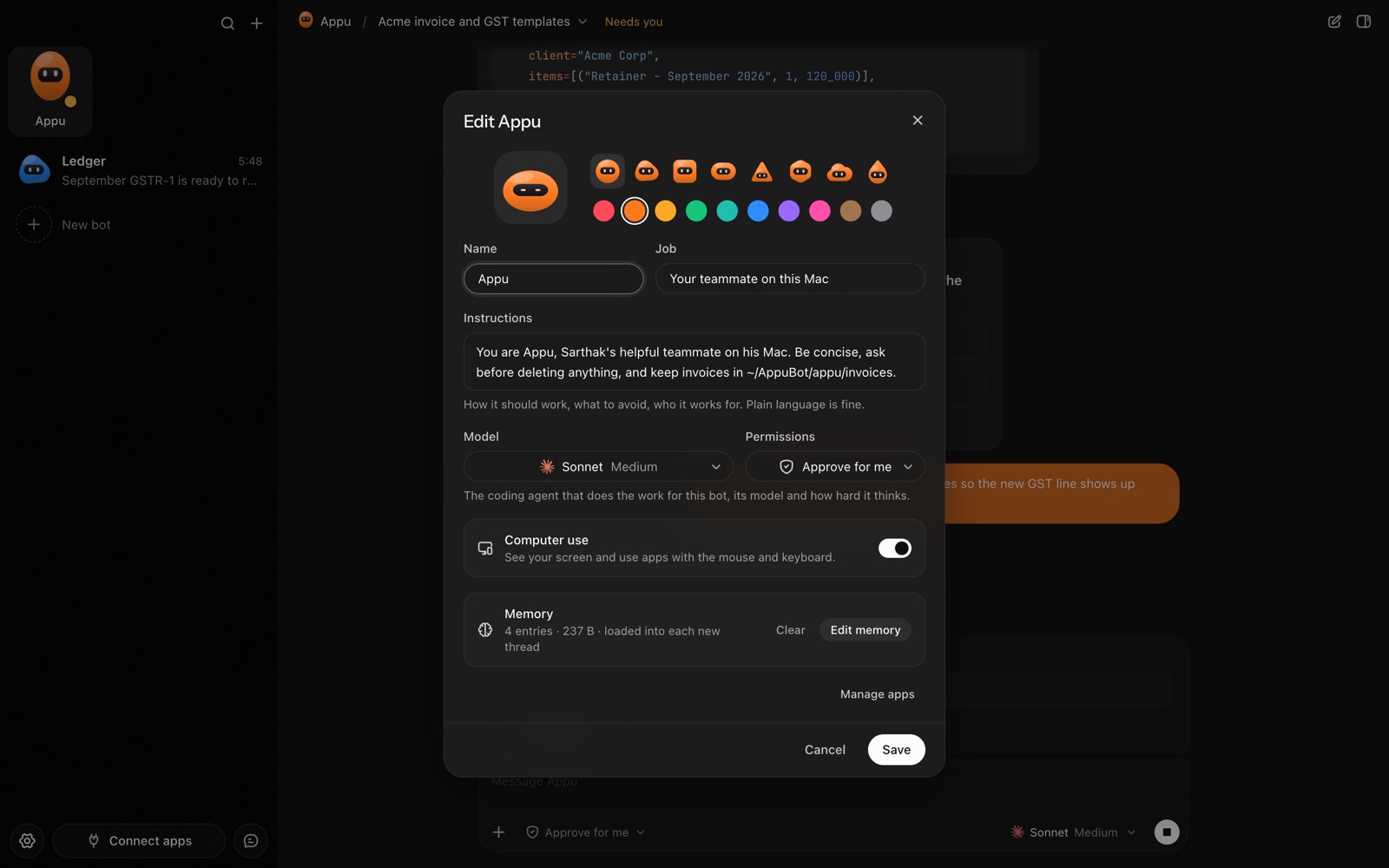
| Approve for me | Full access | |
|---|---|---|
| Reading, searching, thinking | Goes ahead | Goes ahead |
| Changing files, running things, using apps | Routine steps go ahead, the rest asks you | Goes ahead |
| Acting in your accounts (sending email, posting) | Asks you | Goes ahead |
| Good for | New bots, anything touching money or other people | Bots you trust with a well-known job |
With Claude Code and Codex, "Approve for me" uses the agent's own check to decide which steps are routine. With other agents, AppuBot asks about everything beyond reading and searching.
How does asking work?
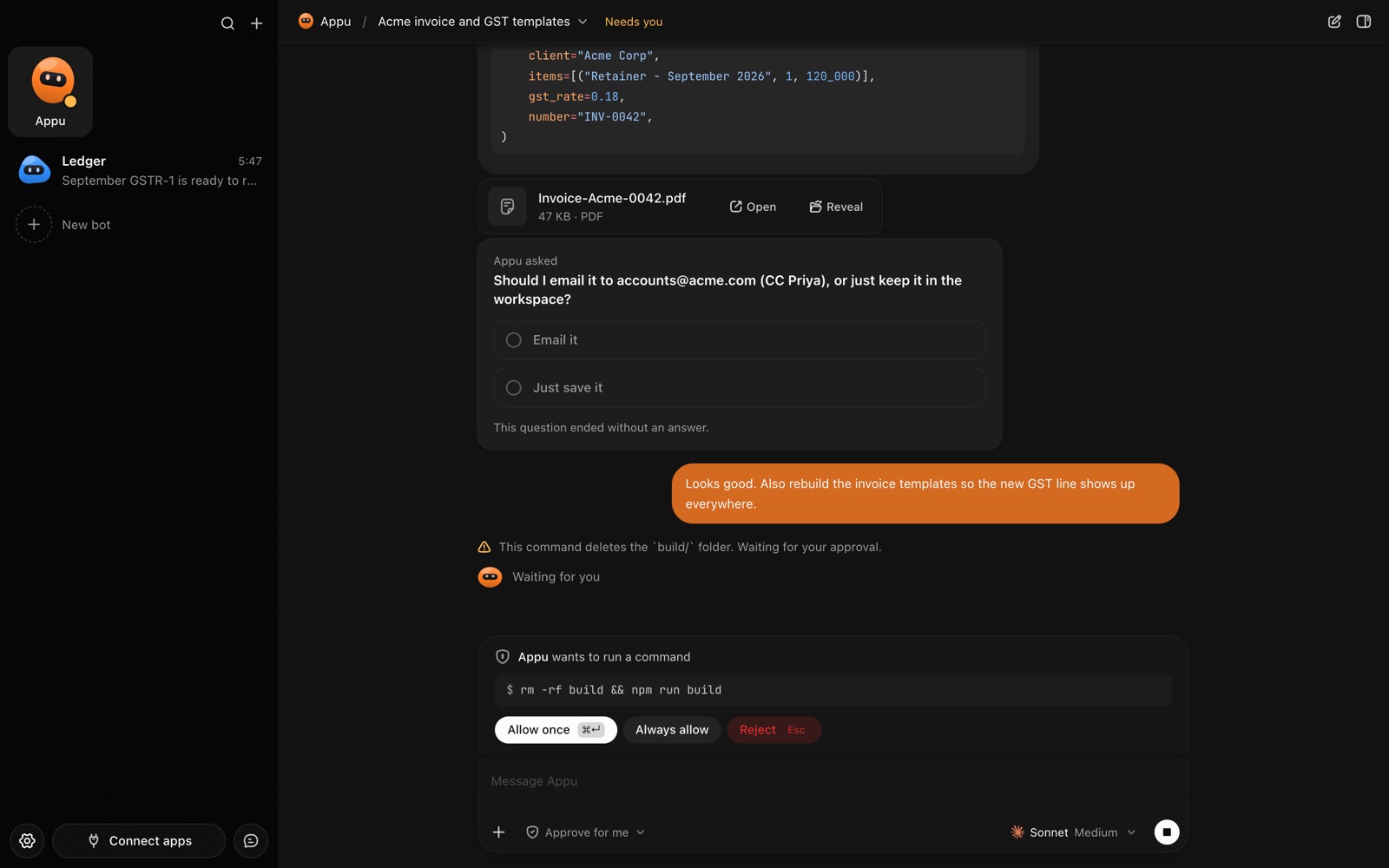
- The bot reaches a step that needs your OK and pauses.
- You see a card in the chat saying what it wants to do, with Allow and Deny, plus a notification if AppuBot is in the background.
- If the task started on Telegram, the question comes there with buttons, so you can answer from your phone.
- It waits as long as you take: there is no timeout that decides for you.
- Allow and it carries on; Deny and it looks for another way or tells you it can't.
What always asks, whatever the setting?
- Giving a bot more power. Turning on computer use or an app for a bot, moving it to Full access or to another AI, when a bot asks for it itself.
- Making new bots. A bot can propose a new bot; it is made only after you allow it.
- New schedules. A routine a bot creates, or a new prompt or time for one, waits for you (routines).
- Changing another bot. One bot editing another bot's name, job or instructions shows you the whole change first.